I’ve been trained by every RPG to chase power fantasies. Level up, get stronger, unlock the next skill, dominate the next boss. That’s the contract gaming has always offered me: effort equals reward, time equals power. Then I played games where your character gets weaker. And it was the best thing that happened to me.
In this article, I’m diving deep into games where your character gets weaker over time — a mechanic I’ve come to believe is one of the most emotionally honest design choices in the medium. I’ll break down why reverse progression works, walk through the games that do it best, and explain what losing power taught me about why I play games at all.
If you’ve ever felt numb from yet another skill tree, bookmark this. You might never look at progression the same way again.
Games Where Your Character Gets Weaker — Why This Works
Most games promise growth. You start weak, you end strong, and the dopamine loop of incremental improvement carries you through dozens of hours. It’s satisfying — I’m not denying that. But it’s also a lie. Real life doesn’t work that way. In reality, people age. They lose speed, stamina, sharpness. They adapt, compensate, and find meaning in what remains. So why do games almost universally refuse to model this?
The answer is simple: power fantasies sell. Nobody markets a game by saying “you’ll feel increasingly helpless.” But that’s exactly why games where your character gets weaker are so powerful — they subvert the fundamental promise of the medium. When a game strips away your abilities instead of adding them, it renegotiates the contract between player and designer. Effort no longer equals reward. Time no longer equals power. And in that gap between expectation and reality, something genuinely profound happens.
Reverse progression works because it mirrors actual human experience. Everyone ages, weakens, and loses capabilities. A game that acknowledges this isn’t being punishing — it’s being honest. The tension it creates is unlike anything in a normal progression system. When you’re getting weaker, every encounter carries genuine stakes because you know you’ll be less prepared next time. You can’t just grind past the problem. You have to get better — as a player — while your character gets worse. That paradox is where the magic lives.
I think about this every time someone dismisses reverse progression as “bad design.” It’s not bad design. It’s different design, designed to make you feel something other than satisfaction. And in a medium drowning in satisfaction loops, feeling something else is a gift. It’s the same reason I find AI-generated content killing creativity in gaming so troubling — when every game optimizes for the same dopamine hit, the experiences that actually matter get lost.
Sifu — Aging Is the Punishment and the Reward
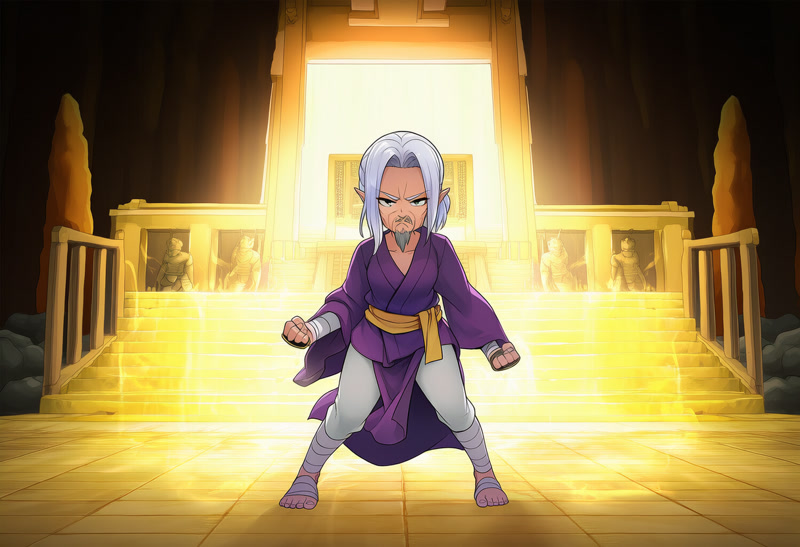
Sifu is the game that broke me open on this concept. The aging mechanic is deceptively simple: every time you die, your character ages. At age 20, one death ages you to 21. But as your death counter climbs, each death ages you by multiple years. Past age 70, the next death is permanent. Your run is over.
Here’s the brutal poetry of it: aging reduces your maximum health but increases your damage output. You hit harder because you have less to lose. The trade-off mirrors real aging in a way that stopped me cold the first time I noticed it. My fighter was 45 years old, frail, devastating — and I was playing more carefully than I’d ever played any action game. Not because the game was harder, but because I understood what was at stake.
The community is split on whether Sifu’s aging is punishing or brilliant. Some players treat it purely as failure — restarting levels to achieve the youngest possible completion, treating every year gained as a mistake. I understand that instinct. But I think it misses the point entirely. Sifu isn’t asking you to avoid aging. It’s asking you to experience it. Watching your young fighter become old and frail across a playthrough creates a visceral sense of time passing that no cutscene could achieve. You don’t watch your character grow old — you cause it. Every death is a year. Every mistake has a cost that compounds.
The only way to revert your age is to replay previous levels with fewer deaths, which means the game’s “solution” is literally to go back and live those years better. I can’t think of a more elegant metaphor for regret. Sifu taught me that games where your character gets weaker aren’t about losing — they’re about understanding what loss costs. And that’s a lesson no power fantasy can teach.
| Age Range | Health | Damage | What It Feels Like |
|---|---|---|---|
| 20–30 | High | Normal | Invincible and sloppy |
| 30–50 | Medium | Increased | Calculated and dangerous |
| 50–70 | Low | High | Fragile and lethal |
| 70+ | Critical | Maximum | One hit from death, hitting like a god |
Pathologic 2 — Getting Sicker, Getting Wiser
If Sifu is reverse progression as metaphor, Pathologic 2 is reverse progression as experience. You play as the Haruspex, a surgeon returning to a town consumed by the Sand Plague. And you are not immune. The infection progressively weakens you, reducing your health and immunity with every passing day. Hunger, exhaustion, and infection create a constant downward pressure on your capabilities. Your weapons degrade. Your protective gear wears out. Your surgical tools dull.
Pathologic 2 is one of the few games where feeling awful IS the point. The disease mechanic makes you feel the same helplessness as the town’s inhabitants. You’re not a hero saving the day — you’re a dying man trying to hold on. I remember limping through the infected district, my vision blurred by fever, my inventory empty, trying to reach a pharmacy that might not even have medicine. That wasn’t fun. It was something better than fun. It was real.
What makes Pathologic 2’s approach so effective is that it doesn’t just weaken your stats — it weakens your perception. When you’re infected, the world literally looks different. Colors shift, sounds distort, your character stumbles. The game doesn’t tell you that you’re getting sicker; it makes you feel it in your eyes and ears. This is environmental storytelling at its most visceral, and it’s something I think about every time I see a game where status effects are just numbers on a HUD.
The community considers Pathologic 2 one of the most emotionally affecting games ever made, and I agree. It’s also one of the most important examples of games where your character gets weaker, because it proves that reverse progression isn’t a gimmick — it’s a design philosophy that can carry an entire narrative. The town is dying. You are dying. The game doesn’t let you pretend otherwise, and that refusal to comfort you is exactly what makes it unforgettable. For a different kind of power fantasy, check out my take on games where you play as a king — the contrast is striking.
Other Games Where Your Character Gets Weaker — And Why You Should Play Them
Sifu and Pathologic 2 are the heavy hitters, but they’re not alone. Several other games have experimented with reverse progression, and each one approaches the concept from a different angle. Here are the ones I think are worth your time.
NieR: Automata isn’t a pure reverse progression game, but its narrative structure involves repeated cycles of loss that function mechanically the same way. 2B and 9S lose memories, bodies, and capabilities across playthroughs. The game’s Route structure — A through E — strips away certainty with each iteration. And the final ending? It requires you to sacrifice your save data to help other players. That’s not just de-powering your character. That’s de-powering yourself. I’ve never deleted a save file that felt more meaningful.
Prey (2017) has one of the most disturbing de-powering sequences I’ve experienced. The neuromod extraction scene forces you to watch as abilities and memories are ripped from your character’s brain. You lose not just the mechanical ability but all memories obtained during that period. It’s both a mechanical and narrative de-powering — you literally lose part of yourself. The game makes you feel the violation of having your mind altered, and it’s a rare example of a game making the player experience the same horror as the protagonist.
Castlevania: Lords of Shadow 2 frames its entire narrative around a once-omnipotent being reduced to vulnerability. You play as Dracula, awakened after centuries of slumber, weakened and desperate. While the gameplay involves regaining powers (so it’s technically normal progression), the story premise — immortality itself as a form of weakening — is a powerful example of the trope. You exist forever, but your power fades. That’s not a gameplay mechanic. That’s existential horror.
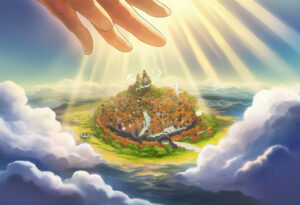
Incarnation is a roguelite where you play as a divine entity descending from the heavens. After completing each level, you must permanently lose one of your celestial powers until you’re completely transformed into a mortal. You start invincible and progressively surrender abilities like immortality, damage resistance, and movement powers. The twist? Each power loss is a deliberate choice you make. That creates a unique emotional weight compared to games where power loss is involuntary. Reportedly developed as a graduation project at an Israeli art academy, it’s one of the most literal executions of the fall-from-grace narrative I’ve seen.
Resin is an indie game where the player character gets progressively weaker as the game progresses. The developer was specifically interviewed by Siliconera about the design philosophy of making a game where the player loses power instead of gaining it. The developer chose reverse progression to create a sense of vulnerability and urgency that normal progression simply can’t achieve. As you lose abilities, you must rely more on skill and strategy than raw power — which is exactly the paradox that makes this mechanic so compelling.
| Game | How You Get Weaker | Emotional Beat |
|---|---|---|
| NieR: Automata | Lose memories, bodies, save data across routes | Sacrifice as the ultimate progression |
| Prey (2017) | Forced neuromod extraction strips abilities and memories | Identity violation |
| Castlevania: LoS2 | Dracula awakens weakened after centuries | Immortality as decay |
| Incarnation | Choose to surrender divine powers each level | The fall as player choice |
| Resin | Progressive ability loss throughout the game | Vulnerability as design |
There are other games that flirt with this territory without fully committing. Dark Souls’ hollowing mechanic makes you visually and mechanically more diminished with each death. Metal Gear Solid 4 gives us Old Snake — Snake literally ages and his body breaks down across the game. Bloodborne’s insight mechanic makes you MORE vulnerable to frenzy the more you understand. Breath of the Wild and Tears of the Kingdom use weapon durability to create constant de-powering. Darkest Dungeon’s stress mechanic makes heroes deteriorate mentally until they must be dismissed. These aren’t pure reverse progression, but they share the same DNA — the understanding that losing something can be more compelling than gaining it.
I think about this a lot in the context of why AI is ruining game development. When algorithms optimize every experience for maximum engagement, the weird, uncomfortable, deliberately unsatisfying mechanics are the first things to get sanded off. Reverse progression doesn’t test well in focus groups. It doesn’t generate smooth engagement curves. But it generates something rarer: genuine emotional resonance.
Why Reverse Progression Hits Different
I’ve spent thousands of hours in games where I get stronger. I’ve maxed out skill trees, hit level caps, and ground through endgame content. And I remember almost none of it. What I remember are the moments where a game took something away from me.
I remember watching my Sifu fighter’s hair turn white. I remember deleting my NieR save. I remember stumbling through Pathologic 2’s infected district with nothing left. I remember Prey’s neuromod extraction scene — the way the screen flickered as pieces of my character’s mind were deleted one by one. These moments live in my memory because they cost me something. They weren’t free. They weren’t the result of a dopamine loop. They were the result of a game choosing to hurt me, and me choosing to keep playing anyway.
That’s what games where your character gets weaker understand that most games don’t: loss creates attachment. When you’re getting stronger, you’re accumulating. You’re building a tower of abilities and stats. But when you’re getting weaker, you’re choosing what to keep. Every loss forces you to decide what matters. Every reduction in capability makes you appreciate what remains. It’s the same reason people value things more when they know they’re temporary — which is, not coincidentally, exactly what aging teaches us in real life.
There’s also a beautiful paradox at the heart of reverse progression: the player gets better while the character gets worse. As my Sifu fighter aged and lost health, I learned to parry more precisely. As my Pathologic 2 character grew sicker, I learned to plan routes more carefully and prioritize resources more ruthlessly. The game was taking away my safety net, and I was learning to walk without it. That’s not a bug. That’s the most elegant difficulty curve I’ve ever experienced — one where the game doesn’t get harder; you get more skilled to compensate for your character’s decline.
I think this is why reverse progression resonates so deeply with me in 2026. I’m living in a moment where optimization culture has infected everything — including games. Every system is tuned for engagement. Every mechanic is designed to keep you playing. AI models are getting better at predicting what keeps us clicking. And in that environment, a game that deliberately makes you weaker feels almost rebellious. It’s a designer saying: “I don’t care if this is satisfying. I care if it’s true.”
Reverse progression also forces emotional investment in the character rather than the power fantasy. When my Sifu fighter was young and strong, I didn’t think about him much. He was a vessel for my skill. But when he was 62 years old, one bad fight from death, I started to care about him. Not what he could do. Who he was. A man who’d spent his entire life fighting and was running out of life to spend. That’s a character I remember. That’s a story I carry.
The TVTropes page on reverse progression and power loss catalogs dozens of examples across media, but games are uniquely positioned to exploit this mechanic because they’re the only medium where the audience is the character. When a movie protagonist gets weaker, you watch it. When a game protagonist gets weaker, you experience it. That’s the difference, and it’s enormous.
So yes, I’ll keep playing games where I get stronger. That’s fun. But I’ll always come back to the games where I get weaker. Because those are the ones that taught me something about what it means to play — and what it means to lose, and why losing can matter more than winning ever could.
Frequently Asked Questions
What games make your character weaker over time?
The most notable games where your character gets weaker include Sifu (aging mechanic), Pathologic 2 (disease progression), Incarnation (surrendering divine powers), Resin (progressive ability loss), and Prey (2017, forced neuromod extraction). NieR: Automata also features loss across its route structure, culminating in a save data sacrifice.
Why would a game make you lose abilities as you progress?
Reverse progression creates emotional stakes that normal progression can’t achieve. When you’re getting weaker, every encounter carries genuine tension because you know you’ll be less prepared next time. It also creates a unique paradox where the player improves their skill while the character declines, producing one of the most elegant difficulty curves in game design.
Is Sifu’s aging mechanic punishing or brilliant?
It’s both — and that’s the point. Aging reduces health but increases damage, creating a trade-off that mirrors real aging. Some players find it frustrating because it contradicts the power fantasy they expect. I find it brilliant because it makes every death meaningful and transforms the entire playthrough into a meditation on time, mortality, and regret.
What is reverse progression in game design?
Reverse progression is a design philosophy where the player character loses abilities, stats, or capabilities over the course of the game instead of gaining them. It subverts the standard “effort equals reward” contract between player and game, creating emotional resonance through loss rather than satisfaction through accumulation.
Are there roguelites where you get weaker instead of stronger?
Yes — Incarnation is the clearest example. It’s a roguelite where you start as an invincible divine entity and must permanently surrender one celestial power after each level until you become mortal. Resin is another indie roguelite built around progressive ability loss. These games prove that reverse progression can work even within genres traditionally defined by accumulation.
Conclusion
Games where your character gets weaker aren’t broken. They’re not bad design. They’re not “punishing the player.” They’re something far more interesting: honest. They acknowledge what every other game pretends isn’t true — that strength is temporary, that loss is inevitable, and that the most meaningful stories aren’t about becoming powerful but about understanding what power costs.
I started this article by saying that playing a game where I got weaker was the best thing that happened to me as a gamer. I meant it. Sifu taught me that aging can be beautiful. Pathologic 2 taught me that helplessness can be profound. NieR taught me that sacrifice can be the point. These lessons don’t come from games that hand you everything. They come from games that take things away — and trust you to find meaning in what’s left.
If you’ve never played a game where your character gets weaker, start with Sifu. Then play Pathologic 2. Then sit with the feelings they give you. I promise they’ll stay with you longer than any level-up ever could.