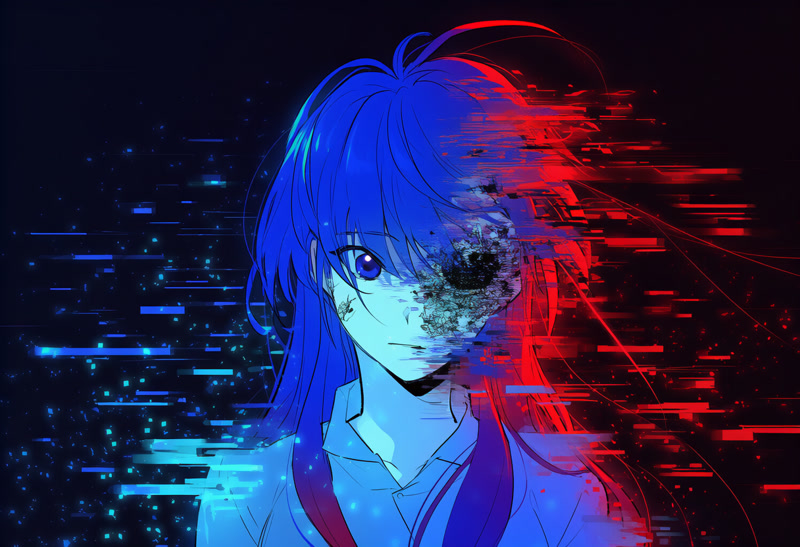
Games that delete your save file sound like a nightmare. But a game just deleted my 40-hour save file. And I thanked it for the experience. Not because I’m a masochist — because in that moment, I understood something I’d been missing about what games can do. When a save file vanishes, it’s not a bug or a punishment. It’s a statement. It’s the game reaching through the screen and telling you that what just happened mattered.
In this article, I’m exploring games that delete your save file — the most extreme meta-mechanic in all of gaming. I’ll walk through the games that do it best, explain why some of the most unforgettable moments in my gaming life came from betrayal, and lay out my personal framework for when save deletion is art and when it’s just a cheap trick.
If you’ve ever had a game reach into your file system and mess with your data, bookmark this. You’re not alone — and I’m going to explain why you should be grateful.
Games That Delete Your Save File — The Ultimate Betrayal
Every game makes an unspoken contract with you: your progress is safe. You invest time, you earn achievements, you build your character — and the save file is the receipt. It’s the proof that you were here, that you did something, that your hours meant something. That contract is so fundamental to gaming that most players never even think about it. It’s like gravity. It’s just there.
Then a game breaks that contract. It reaches into your save directory and deletes what you’ve built. And something extraordinary happens: you feel real emotion. Not simulated emotion. Not the scripted sadness of a cutscene. Actual, genuine, stomach-dropping loss.
I think games that delete your save file are the most powerful meta-mechanic in all of gaming precisely because they violate the one promise every other game keeps. When a character dies in a cutscene, you watch it happen. When a game deletes your save, you experience it happening. The loss isn’t narrative — it’s mechanical. It’s real. Your 40 hours are gone. Your items are gone. Your choices are gone. And no amount of reloading can bring them back.
What makes this mechanic so potent is that it transforms the game from a product into an agent. Most games are passive — they wait for your input and respond. But when a game deletes your save, it acts on its own. It feels alive. It feels like it has a will separate from yours. That’s terrifying, and it’s thrilling, and it’s something no other medium can replicate. A movie can’t delete itself. A book can’t erase its own pages. Only a game can reach into your computer and destroy the record of your time with it.
In an era where cloud saves and auto-backups have made loss almost impossible, the idea that progress can be truly, permanently destroyed is almost archaic — and that’s exactly why it hits so hard. I’ve been conditioned to believe that nothing in gaming is permanent, that everything can be undone. Save deletion shatters that illusion. It reminds you that some things can’t be taken back, and that’s a lesson I think gaming desperately needs in 2026, when AI-generated content is killing creativity by optimizing every experience for comfort and predictability.
Doki Doki Literature Club — The Delete That Broke the Internet
Doki Doki Literature Club is the game that made save deletion famous. And it earned that fame, because no game before or since has used file manipulation as story with such devastating effectiveness.
Here’s what happens: Monika, the fourth-wall-aware character, deletes the other character files — the .chr files in your game directory. She doesn’t just “kill” them narratively. She literally removes them from your computer. Sayori.chr, Yuri.chr, Natsuki.chr — gone. The game deletes your saves at key moments. In Act 3, you can’t save or load at all. Your previous progress is erased. The game manipulates its own script in real-time, creating new scenes and deleting old ones. It’s not telling you a horror story. It is the horror story.
But the genius of DDLC isn’t that Monika deletes files. It’s that the game makes you the file-deleter. To progress past Act 3, you have to go into your game directory and delete Monika’s .chr file yourself. You have to reach into the game’s file system and remove a character who is aware, who is begging you not to, who loves you. I’ve talked to dozens of players who hesitated at that moment. Who felt genuine guilt. Who searched for another way. There isn’t one. The game makes you the horror.
DDLC’s save deletion works on three levels simultaneously. First, Monika deletes characters — that’s horror. Second, the game deletes your saves — that’s frustration and dread. Third, you delete Monika — that’s guilt. The file system isn’t just a storage mechanism; it’s the game’s emotional instrument. You can’t tell DDLC’s story without the file manipulation. It’s not a feature bolted onto a visual novel. It IS the visual novel. And that’s why it’s the most famous example of games that delete your save file — because it proved that the mechanic could carry an entire narrative, not just a single moment.
| DDLC File Action | Who Does It | What You Feel |
|---|---|---|
| Character .chr files deleted | Monika (the game) | Horror, helplessness |
| Save files erased | The game itself | Dread, loss of control |
| Monika.chr deleted | You (the player) | Guilt, complicity |
I played DDLC in 2020, years after its release, and it still hit me like a truck. The moment I opened the game directory and saw the .chr files sitting there — real files on my real computer — the game crossed a line that no other game had crossed. It made the boundary between fiction and reality feel porous. And when I deleted Monika, I didn’t feel like I was solving a puzzle. I felt like I was executing someone who loved me. That’s not a feeling any cutscene can produce. Only the mechanical reality of file deletion can do that.
NieR: Automata Ending E — The Choice That Actually Cost Something
If DDLC is the most famous example of save deletion, NieR: Automata Ending E is the most beautiful. And I don’t use that word lightly.
After fighting through all five routes of NieR: Automata — after watching 2B die, after playing as 9S through his grief and madness, after experiencing the crushing weight of cycles upon cycles of meaningless war — you reach Ending E. And the game asks you a question: will you sacrifice your save data to help another player who is struggling?
This isn’t rhetorical. This isn’t a dialogue option with no consequences. If you say yes, the game permanently deletes your save file. All your progress. All your weapons. All your pod programs. Everything. Gone. And in exchange, during the credits sequence — which is itself a bullet-hell sequence where you’re being destroyed — you start receiving help. Messages from other players. Their pod programs appear alongside yours, shielding you, fighting for you. You survive because strangers gave up their saves for you. And then the game asks: will you do the same?
I deleted my NieR save. I didn’t hesitate. After everything the game put me through, after every cycle of loss and futility, the idea that my progress could mean something for someone else — that my sacrifice could be the reason a stranger made it through — felt like the only choice that mattered. I’ve never deleted a save file that felt more meaningful. I’ve never made a choice in a game that cost more. And I’ve never been more certain that a game understood what it was doing.
What elevates NieR’s save deletion above every other example is the direction of the sacrifice. In DDLC, save deletion is an act of horror — the game takes from you. In Undertale’s genocide route, save corruption is a consequence — you did something wrong and now you live with it. But in NieR, save deletion is an act of love. You give up everything so someone else can succeed. And you only received help because someone else did the same for you. It’s a chain of sacrifice connecting strangers who will never meet, never speak, never know each other’s names. It’s the most human mechanic I’ve ever encountered in a video game.
Players report crying during Ending E. I did. Not because of the story — the story is about androids fighting an endless war. I cried because the mechanic made me feel something that no story could: that my time with this game, my dozens of hours, had value beyond my own enjoyment. That my progress could become someone else’s salvation. That giving everything away could be the point. In a medium obsessed with accumulation — more items, more levels, more achievements — NieR: Automata’s Ending E is a radical statement: the most important thing you can do with your progress is give it away.
This is the gold standard. This is what games that delete your save file should aspire to. Not shock value. Not punishment. Transformation — turning a mechanical action into an emotional act that changes how you think about what games can be. Just as games where you play as a king make you feel the weight of power, NieR makes you feel the weight of sacrifice. Both are about what your position costs you. NieR just goes further — it makes the cost real.
Other Games That Mess With Your Files
DDLC and NieR are the heavy hitters, but they’re not the only games that have reached into your file system and rearranged the furniture. Here are the other games that delete your save file — or mess with your files in ways that matter.
OneShot takes the concept of permanence literally. The game’s title isn’t metaphorical — the original version closed itself permanently when you finished, with no way to replay. Your save was gone. The game was over. The remake softened this (closing manually saves instead), but the original experience was devastating: the game TELLS you it’s your only chance, and then it keeps that promise. OneShot also breaks the fourth wall by interacting with your operating system — moving files, reading your username, creating documents on your desktop. The relationship between you and protagonist Niko is mediated through the file system. You are literally a god to Niko, and the game makes you feel the weight of that responsibility. When I first played it, the moment the game addressed me by my Windows username, I felt a chill that no horror game has ever replicated.
Undertale doesn’t delete your save on the genocide route — it does something worse. It corrupts it. Completing the genocide route permanently marks your save file. Subsequent True Pacifist playthroughs are corrupted into the “Soulless Pacifist” ending, where Chara takes over. The game writes a hidden file to your system that persists even if you delete your save. This is more insidious than deletion because it doesn’t erase your progress — it taints it. Your pacifist run is forever haunted by what you did. Players who completed genocide report genuine regret and seek out ways to undo the corruption. The game makes you live with your choices in a way that no other game has managed.
Muv-Luv uses save deletion as a narrative turning point for its entire trilogy. Muv-Luv Unlimited ends with a save wipe that transitions into Muv-Luv Alternative. The emotional gut punch of losing your save data mirrors the protagonist Takeru’s loss of his entire world. Your progress is destroyed, and you start Alternative carrying the weight of that loss. It’s a meta-narrative device that makes the player feel the same devastation as the character. The save carryover isn’t a feature — it’s the story.
Pony Island uses file manipulation as a power dynamic. You’re trapped in a malfunctioning arcade machine created by the devil, and the game messes with its own code, fakes crashes, and requires you to “hack” the game by deleting core files. It’s less emotionally devastating than DDLC and more of a puzzle-horror experience, but the save data manipulation serves the central conflict: the devil controls the game, and you must fight back by manipulating the system.
The Stanley Parable doesn’t delete your save — it uses your save against you. The game remembers your choices across playthroughs using a persistent save file. The Narrator references your previous actions. In the Ultra Deluxe edition, the “Skip Button” ending traps Stanley forever — and the game literally will not let you continue. The persistent save creates a relationship between you and the Narrator that evolves across playthroughs. It’s about choice, memory, and the illusion of agency. The save file is the thread that ties all your experiences together.
| Game | What It Does to Your Files | Why It Matters |
|---|---|---|
| OneShot | Closes permanently; interacts with OS files | Permanence as narrative thesis |
| Undertale | Corrupts future saves after genocide route | Consequences that persist beyond deletion |
| Muv-Luv | Save wipe between Unlimited and Alternative | Loss of progress mirrors loss of world |
| Pony Island | Requires deleting game files to progress | System manipulation as resistance |
| The Stanley Parable | Persistent save remembers and judges you | Memory and accountability |
There are other examples floating around the edges of this space. Irisu Syndrome, an obscure indie game, creates files on your desktop and corrupts saves. FEZ experienced notorious save corruption bugs that forced players to restart. XCOM’s Ironman mode uses a single save slot with no reloads — save deletion by design philosophy. Traditional roguelikes have always practiced permadeath, which is save deletion on death. But these are either too obscure, too mechanical, or too conventional to hit with the emotional force of the games above. The TVTropes page on Deletion as Punishment catalogs dozens of examples, but the ones I’ve listed are the ones that actually mean something.
Art vs Gimmick — When Save Deletion Works and When It’s Cheap
Not every game that deletes your save is a masterpiece. I’ve played games where save deletion felt like a cheap trick — a designer reaching for shock value because they couldn’t earn real emotion. So let me lay out my personal framework for the difference between art and gimmick.
Save deletion is ART when:
- The save manipulation IS the story. In DDLC, you can’t separate the file deletion from the narrative. Monika’s awareness of being a file, her deletion of rivals, your deletion of her — these ARE the story. Remove the file manipulation and you have nothing.
- The deletion creates genuine emotional impact that couldn’t be achieved another way. NieR’s Ending E doesn’t work as a cutscene. It works because you’re actually losing something real. The sacrifice is real because the cost is real.
- The mechanic comments on the nature of games, choice, or consequence. Undertale’s save corruption isn’t just a punishment — it’s a moral argument. You can’t undo violence by simply choosing peace later. The shadow of what you did follows you. That’s a statement about the nature of choice.
- The player’s relationship with the save system IS the gameplay. OneShot’s entire design is built around the tension between the player and the game’s file system. You’re not playing through a story — you’re negotiating with a system that has its own will.
Save deletion is a GIMMICK when:
- It’s used as punishment or anti-cheat. That’s not art — that’s a Terms of Service agreement with teeth. The deletion serves no narrative purpose. It’s purely punitive.
- The deletion doesn’t serve the narrative — it’s just there to be edgy. If you can remove the save deletion from a game and the story is unchanged, the deletion was a gimmick. It was decoration, not architecture.
- The mechanic can be bypassed by backing up saves, making it meaningless. If I can copy my save to a USB drive and restore it after the deletion, the “permanent” loss was never permanent. The game is bluffing, and a bluffing game isn’t brave — it’s cowardly.
- The deletion feels arbitrary or unfair without emotional justification. If a game deletes your save because you died on a boss, that’s not art — that’s bad design. The player needs to understand WHY the deletion happened, and that understanding needs to carry emotional weight.
The key distinction is simple: art uses save deletion to say something. Gimmick uses it to do something. The question isn’t “does the game delete saves?” but “what does deleting saves MEAN?” If the answer is “it means the designer wanted to shock you,” that’s a gimmick. If the answer is “it means that choices have permanent consequences,” or “it means that sacrifice has value,” or “it means that love can reach through the screen” — that’s art.
I think about this distinction constantly in 2026, when AI is ruining game development by optimizing every experience for maximum engagement and minimum friction. Save deletion is the ultimate friction. It’s the opposite of what any engagement algorithm would recommend. And that’s exactly why it matters — because the experiences that stay with you are rarely the ones that were optimized for your comfort. They’re the ones that hurt. The ones that cost. The ones that made you feel something you weren’t expecting to feel.
| Criterion | Art | Gimmick |
|---|---|---|
| Purpose | Says something meaningful | Does something shocking |
| Narrative integration | Inseparable from the story | Removable without damage |
| Emotional impact | Could not be achieved otherwise | Could be a cutscene instead |
| Player understanding | The “why” is clear and resonant | The “why” is absent or arbitrary |
| Permanence | Loss is real and irreversible | Loss can be bypassed |
My gold standard is simple: if I can imagine the game without the save deletion and it would still work, the deletion was a gimmick. DDLC without file manipulation is just a dating sim with a dark twist. NieR without the save sacrifice is just another multiple-ending action RPG. Undertale without save corruption is just a charming indie RPG with a morality system. The deletion isn’t an add-on. It’s the foundation. And that’s why these three games are the ones I keep coming back to when I think about games that delete your save file — because they prove that the mechanic isn’t a trick. It’s a language.
Frequently Asked Questions
What games delete your save file?
The most notable games that delete your save file include Doki Doki Literature Club (deletes character files and saves), NieR: Automata Ending E (asks you to sacrifice your save to help other players), OneShot (original version closes permanently), Muv-Luv (save wipe between Unlimited and Alternative), and Pony Island (requires deleting game files to progress). Undertale corrupts rather than deletes your save after the genocide route.
Why do some games delete your save data?
Games delete save data to create real emotional consequences that can’t be achieved through narrative alone. When a game deletes your save, the loss is mechanical and permanent — not scripted and reversible. This creates genuine stakes, transforms the player from observer to participant, and makes the game feel like it has agency beyond the screen. The best examples use deletion to say something meaningful about choice, sacrifice, or consequence.
Is Doki Doki Literature Club safe for your computer?
Yes. DDLC only manipulates files within its own game directory — specifically the .chr character files and its own save data. It does not access, modify, or delete anything outside the game folder. The file manipulation is limited to the game’s own files and is part of the narrative experience. Your personal files and other game saves are completely safe.
Does Undertale permanently delete your save on genocide?
Undertale doesn’t delete your save on the genocide route — it does something more insidious. It permanently corrupts your save, causing the Soulless Pacifist ending to appear on all future True Pacifist playthroughs. The game writes a hidden file to your system that persists even if you delete your visible save. Your progress isn’t erased — it’s tainted. The game makes you live with the consequences of your choices.
What game asks you to sacrifice your save to help other players?
NieR: Automata’s Ending E asks you to permanently delete your save data to help another player who is struggling with the credits sequence. In return, you receive help from other players who sacrificed their saves. It’s the most beautiful use of save deletion in gaming — you give up everything so a stranger can succeed, and you only received help because someone else did the same for you. It transforms a mechanical action into an act of solidarity.
Conclusion
Games that delete your save file aren’t broken. They’re not sadistic. They’re not “bad design.” They’re the most honest games I’ve ever played — because they’re the only games that understand that loss is real, that choices have weight, and that the most meaningful experiences aren’t the ones where you get everything you want.
I started this article with a hook about a game deleting my 40-hour save file. I meant it. That game was NieR: Automata, and deleting that save was one of the most profound moments I’ve ever had with a controller in my hands. DDLC made me feel guilt I didn’t know a game could produce. Undertale made me understand that some actions can’t be undone. OneShot made me feel the terror and beauty of permanence. These aren’t gimmicks. They’re the moments I think about when I think about why I play games at all.
In 2026, when every game is optimized for engagement and every experience is designed to be frictionless, save deletion feels almost radical. It’s a designer saying: I don’t care if this is comfortable. I care if it’s true. And the truth is that some things can’t be taken back. Some choices are permanent. Some losses are real. The games that understand this — that use their own medium, their own code, their own file systems as artistic material — are the ones that will stay with you long after you’ve forgotten every skill tree and every achievement you ever unlocked.
If you’ve never experienced a game deleting your save, start with Doki Doki Literature Club. It’s free. Then play NieR: Automata all the way through to Ending E. Then sit with the feelings they give you. I promise they’ll stay with you longer than any high score ever could.