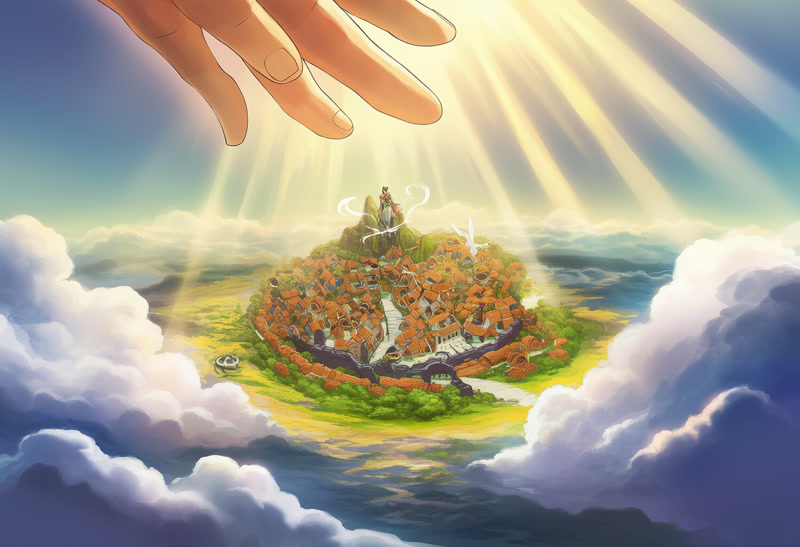
When it comes to games where you play as a god, Black & White was the greatest my kids will never play. I’ve been waiting 20 years for someone to make a god game that good again. They haven’t. The genre that gave us Populous, Dungeon Keeper, and Black & White has been lying in a grave since the mid-2000s, and nobody with a AAA budget seems interested in digging it up. I’m tired of waiting. I’m tired of seeing the same god game question pop up on Reddit every few months — “What happened to god games?” — with the same answers and the same resignation. So I’m writing this. If you’re like me, if you remember what it felt like to reach down from the sky and shape a world with your bare hand, this is for you.
In this article, I’m walking through the entire history of games where you play as a god — from the genre’s golden age to its baffling death, from the one game that ruined me for everything else to the flickering signs of life in 2026. Bookmark this, share it with someone who still remembers their creature, and let’s figure out what happened.
Games Where You Play as a God — The Genre That Died
Let me set the scene. It’s 1989. Peter Molyneux’s Bullfrog Productions releases Populous on the Amiga, and it invents an entire genre overnight. You don’t command armies. You don’t build bases. You play as a literal deity, raising and lowering land, casting miracles, and guiding your followers indirectly. The people aren’t your units — they’re your believers. The game sold four million copies, which was astronomical for the time, and it spawned imitators, sequels, and an entire design philosophy. You can read more about the genre’s origins on Wikipedia’s god game overview.
What made games where you play as a god different from strategy games was the indirect control. In Command & Conquer, you click and units obey. In Populous, you reshape the world and hope your followers figure it out. That tension — between your godlike power and your followers’ stubborn free will — was the entire point. You weren’t a general. You were a god. And being a god meant accepting that your worshippers might ignore you.
The genre flourished through the ’90s. Populous got sequels. Dungeon Keeper (1997) let you play as an evil dungeon lord — same indirect-control DNA, different moral alignment. Black & White (2001) was the apex. And then… nothing. The genre didn’t evolve. It didn’t slowly fade. It dropped off a cliff. The last AAA god game was Black & White 2 in 2005, and since then, major publishers have treated the concept like it’s radioactive.
I’ve spent years trying to understand why. The answer, as usual, is more complicated than one thing — and more depressing than I’d like.
Black & White — The God Game That Ruined Me for Everything Else
I need to talk about Black & White specifically because no other game in this genre — and arguably no other game in any genre — has matched what it did in 2001. If you never played it, I genuinely envy you, because you still get to imagine what a perfect god game might feel like. I already know, and I’ve been chasing that feeling for two decades.
Here’s what made Black & White extraordinary:
The Creature AI. You picked an animal — a cow, an ape, a tiger, or later a wolf — and it learned from you. Not through dialogue trees or skill points. Through actual behavioral reinforcement. Reward it for eating a villager? It becomes a monster. Punish it? It learns to help with farming. The AI was designed by Richard Evans and used a desire-action mapping system that was, frankly, decades ahead of its time. Nothing has replicated this depth since. As Eurogamer noted in their retrospective, the creature AI was so advanced that Google DeepMind researchers later cited it as an influence on their own work.
Moral alignment as world state. Your alignment wasn’t a number on a screen. It changed your appearance, your temple, the landscape, and how villagers reacted to you. Being good made the world bloom. Being evil twisted everything. I spent hours just experimenting with the consequences of my choices — not because the game told me to, but because I was genuinely curious what kind of god I’d become.
Gesture-based spell casting. Drawing shapes with the mouse to cast spells felt genuinely divine. No hotbar. No cooldown timers. You physically traced miracles into the air. It was tactile and physical in a way that no other game’s magic system has matched.
The hand as interface. Your cursor was literally your god hand. You could pick up villagers, pet your creature, or smash buildings. The physicality of that interaction — reaching down from the sky to touch your world — is something I still think about every time I click a button in some soulless modern UI.
Black & White wasn’t perfect. The later levels were tedious, the quest design was uneven, and Molyneux’s tendency to overpromise was already showing. But the core — the feeling of being a god with a living, learning creature at your side — was magic. Pure, uncut magic. And nobody has made anything like it since.
The God Games That Came After — And Why They Weren’t Enough
It’s not like nobody tried. After Black & White, a handful of developers attempted to carry the torch. Every single one fell short — not because they were bad games, but because they each captured a fragment of what god games could be without ever assembling the whole picture.
| Game | Year | What It Got Right | What It Missed |
|---|---|---|---|
| From Dust | 2011 | Physics-driven terrain manipulation felt divine | No creature AI, no moral alignment, no civilization growth — more puzzle game than god sim |
| Reus | 2013 | Ecosystem management with four giants was clever | No emotional connection, no creature, felt like a management spreadsheet |
| The Universim | 2018 (Early Access) | Ambitious stone-age-to-space-age civilization arc | Years in Early Access, slow development, never reached its potential |
| WorldBox | 2021 | Sandbox freedom, huge player base, civilizations that actually fight wars | No narrative, no moral weight, a toy not a story — and it knows it |
| Deisim | 2021 (VR) | VR made reaching down feel genuinely divine | Shallow simulation, limited scope, VR-only audience |
From Dust was Ubisoft’s attempt to modernize the god game, and I wanted to love it. The terrain physics — picking up lava, redirecting rivers, sculpting land in real-time — were genuinely impressive. But it was a puzzle game wearing a god game’s skin. There was no creature. No moral alignment. No long-term civilization growth. You solved discrete challenges and moved on. That’s not being a god. That’s being a very powerful contractor.
Reus was smarter than it looked. Controlling four giants to shape biomes and manage human greed was a solid concept. But it lacked the emotional hook. I never cared about my giants the way I cared about my creature in Black & White. They were tools, not companions.
WorldBox is, by player count, the most successful modern god game. It started as a Flash project on Newgrounds in 2012 and evolved into a Steam and mobile phenomenon. I respect what it’s achieved — it proves there IS demand for god games. But WorldBox is a sandbox toy, not a narrative god sim. You spawn orcs and elves and watch them fight. It’s fun for an hour. It doesn’t make you feel anything.
And Deisim deserves a mention for doing something no other god game has tried: VR. Reaching down from above to physically shape terrain in roomscale VR is the closest I’ve felt to actually being a deity since Black & White. But the simulation underneath was too shallow to sustain that feeling.
Each of these games captured a piece of the god game DNA — terrain manipulation, ecosystem management, sandbox freedom, physical immersion. None of them put the pieces together. And that’s the tragedy of this genre: the blueprint exists. I know what works. Nobody with the budget to do it right is willing to try.
If you enjoy power fantasies with more direct control, my article on games where you play as a king covers the royal side of the same coin — but even that genre gets more love from developers than god games do.
Is the Genre Coming Back?
Here’s where things get interesting — and where I allow myself a sliver of hope, even though I’ve been burned before.
Fata Deum launched into Early Access in September 2025, and its marketing literally says “The God Game Genre is Back!” It’s the most direct attempt to revive the classic god game formula I’ve seen in years. You mold settlements and townsfolk in your image, choosing to be a benevolent or malevolent deity. The Kickstarter was successful. The ambition is real. But Early Access reception has been mixed — some players praise the scope, others find it shallow compared to Black & White. I’ve been watching the Steam community discussions, and the pattern is exactly what you’d expect from genre-starved fans: desperate hope mixed with bitter disappointment.
Masters of Albion is the bigger story. Peter Molyneux — yes, that Peter Molyneux — calls it “the culmination of my life’s work.” It blends elements from Dungeon Keeper, Black & White, and Fable. You build and manage a town during the day and defend it from creatures at night. The team includes veterans from Fable, Black & White, and Dungeon Keeper. Early Access launched in April 2026 at $24.99. PC Gamer covered the launch and noted that Molyneux is right about one thing: it’s sad that nobody seems to care about god games anymore.
But here’s my honest take: I don’t trust Molyneux anymore. The Godus Kickstarter controversy. The Curiosity cube debacle. The years of overpromises and underdeliveries. He burned through more goodwill than any developer in history, and the genre he created suffered for it. When the face of god games becomes synonymous with broken promises, publishers aren’t exactly lining up to fund the next one.
There are also smaller signs of life. The Universim is still crawling through Early Access after years of development. Various indie projects on itch.io and Kickstarter keep trying. The demand is there — Reddit threads about god games still get hundreds of upvotes. But demand without AAA investment is just a bunch of people shouting into the void.
And honestly, the broader gaming industry’s problems run deeper than one genre. When AI is ruining game development by homogenizing creativity, and AI slop is killing creativity in gaming across the board, the chances of a publisher greenlighting an expensive, risky, AI-heavy god game simulation are close to zero. The industry would rather iterate on what’s safe.
Why God Games Died — And Why Gaming Needs Them Back
Let me break down why games where you play as a god actually died, because it wasn’t one thing — it was a cascade of failures, market shifts, and one man’s self-destruction.
The Molyneux trust collapse. This is the elephant in the room. After Black & White 2, the Fable promises, the Godus Kickstarter controversy, and the Curiosity cube, the genre’s most famous advocate became its biggest liability. Publishers lost faith in the designer, and by extension, they lost faith in the genre. When your genre’s poster child keeps lying, the whole category becomes toxic to investors.
The complexity barrier. God games require sophisticated AI for followers and creatures, complex simulation systems, and moral alignment tracking. These are expensive and hard to get right. Strategy games with direct control — where you click and units obey — are easier to make, easier to test, and easier to sell. The indirect-control model that defines god games is inherently harder to develop and harder to market.
Genre absorption. The DNA of god games didn’t disappear — it got cannibalized. City builders like Cities: Skylines took the world-shaping. Survival craft games like Rust and Ark took the emergent chaos. Management sims like Rimworld and Dwarf Fortress took the indirect control and emergent storytelling. All of these games took pieces of the god game formula without ever being labeled as god games. They succeeded by being more focused, more marketable, and less ambitious.
The Spore effect. Spore (2008) was supposed to be the ultimate god game — evolution from cell to space civilization. It was overhyped and underdelivered, and its failure made publishers even more wary of ambitious god game pitches. When Will Wright’s name couldn’t save a god game, no name could.
No AAA interest. The bottom line: major publishers see god games as niche. The last AAA god game was Black & White 2 in 2005. Twenty-one years ago. Since then, only indies have tried, with limited budgets and limited reach.
But here’s why I refuse to let this genre go: god games offer something no other genre does.
They make you think about morality, not just efficiency. They make you care about beings you don’t directly control. They create emergent stories that no scripted narrative can match. They give you power and then ask what you’ll do with it — not in a dialogue wheel, but in the actual fabric of a simulated world. When the hardware industry is busy selling us fake frames and diminishing returns, I’d rather play a game that uses computing power to simulate a living, breathing world than one that uses it to render slightly better water reflections.
God games are the only genre where the gameplay IS the philosophy. Every choice you make — every miracle you cast, every villager you help or ignore — is a statement about what kind of god you’d be. That’s not something you get from a shooter. That’s not something you get from a MOBA. That’s something only games where you play as a god can give you.
I miss that. I miss it every time I see another sequel to another franchise that plays it safe. And I’ll keep missing it until someone with the talent and the budget finally steps up.
Frequently Asked Questions
Why did god games die out?
God games died because of a combination of factors: Peter Molyneux’s reputation collapse after the Godus controversy made the genre toxic to publishers, the complexity and cost of building follower AI and simulation systems, the absorption of god game DNA into city builders and management sims, and the failure of Spore to deliver on its god game ambitions. No major publisher has funded a AAA god game since Black & White 2 in 2005.
Are there any new god games coming in 2026?
Yes. Masters of Albion, Peter Molyneux’s latest project, launched Early Access in April 2026. Fata Deum has been in Early Access since September 2025 and continues to receive updates. The Universim remains in long-term Early Access. Several smaller indie god games are also in development on itch.io and Kickstarter.
What made Black and White so special?
Black & White’s creature AI was revolutionary — it genuinely learned from your behavior through reinforcement, not scripted events. Combined with moral alignment that changed the entire world, gesture-based spell casting, and the physical god-hand interface, it created an experience of divinity that no other game has replicated in the 25 years since its release.
What is the best modern god game?
WorldBox is the most popular modern god game by player count, offering a sandbox where you create and destroy civilizations. But if you want something closer to the classic god game formula, Fata Deum is the most direct attempt. Neither matches Black & White’s depth, but both prove the genre still has an audience.
Why are there no AAA god games anymore?
AAA publishers consider god games too risky. They require expensive AI and simulation systems, they’re hard to market to mainstream audiences, and the genre’s most famous designer (Molyneux) destroyed his own credibility. Strategy games with direct control are cheaper to make and easier to sell, so that’s where the investment goes.
Conclusion
Games where you play as a god used to be one of the most ambitious, creative genres in all of gaming. Populous invented it. Black & White perfected it. And then the industry abandoned it — not because players stopped caring, but because publishers stopped believing. The Molyneux trust collapse, the complexity barrier, the cannibalization by other genres, and the Spore disappointment all combined to kill something that deserved to live.
I’ve been waiting 20 years for a god game that makes me feel what Black & White made me feel in 2001. Fata Deum and Masters of Albion are flickering signs of life, but I’ve been burned too many times to call it a revival. What I can say is this: the demand is real. The audience is there. The blueprint exists. Someone just needs the courage and the budget to actually build it.
If you’re as tired of waiting as I am, keep talking about it. Keep posting in those Reddit threads. Keep buying indie god games. Keep reminding the industry that some of us still want to reach down from the sky and shape a world — not command an army, not optimize a build, but actually play as a god.
Read more from me on related topics:
- Games Where You Play as a King — the royal side of the power fantasy
- Why AI Is Ruining Game Development — how homogenization kills genre diversity
- AI Slop Killing Creativity in Gaming — why safe bets are strangling ambitious game design
- DLSS 5 and the GPU Crisis — when hardware priorities miss what gaming actually needs