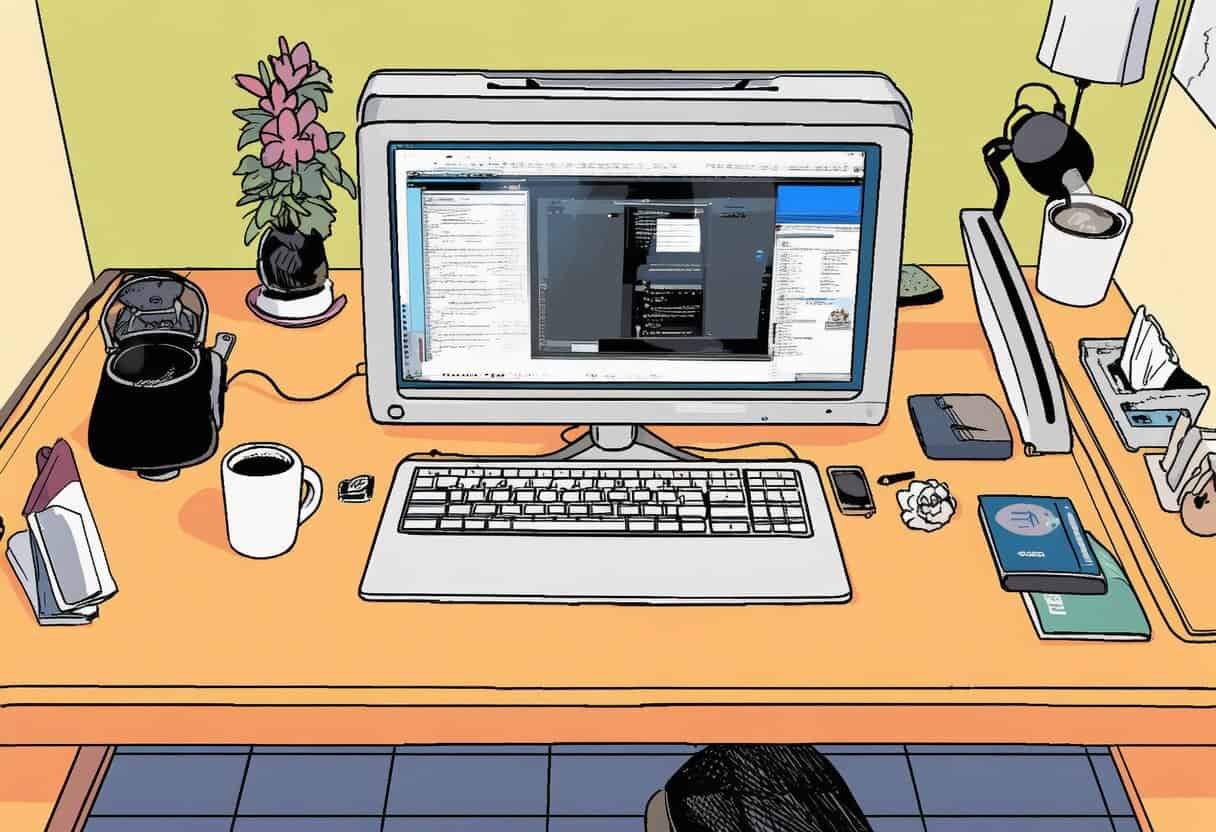
I’m writing this article instead of doing the thing I’m supposed to be doing. Just kidding — but only kind of. Procrastination is something I’ve struggled with my entire life, and I’ve tried every system, app, and technique to fix it. Some things worked. Most didn’t. Here’s what I’ve actually found helpful, from someone who still procrastinates but has gotten much better at managing it.
Updated April 2026.
Why You Procrastinate
Procrastination isn’t laziness. It’s an emotion regulation problem. You procrastinate because the task makes you feel something negative — anxiety, boredom, overwhelm, fear of failure — and avoiding the task removes that feeling. The relief of avoidance is immediate, while the consequences are delayed. This is why willpower alone doesn’t work. I can’t count how many times I told myself “just do it” and then didn’t do it. Understanding that procrastination is emotional, not logical, was the first real breakthrough I had.
What Doesn’t Work
Willpower
“Just do it” is the worst advice for procrastinators. If willpower worked, you wouldn’t be procrastinating. I’ve tried forcing myself to start and it works maybe 20% of the time. The other 80%, I just feel guilty about not starting AND guilty about not being able to force myself to start. Double guilt. Great.
Time Management Apps
I’ve tried Todoist, Notion, Trello, Forest, Pomodoro apps, and a dozen others. They help organize tasks but they don’t solve the emotional problem. A perfectly organized to-do list that you don’t start is just a prettier way to procrastinate. I spent more time organizing my task system than doing tasks. The apps are tools, not solutions.
Punishing Yourself
Guilt, shame, and negative self-talk don’t work. They make procrastination worse because they add more negative emotion to the task. The more guilty I feel about not starting, the more I avoid the task to avoid the guilt. It’s a vicious cycle. I had to learn to forgive myself for procrastinating before I could actually reduce it.
What Actually Works
The 2-Minute Rule
If a task takes less than 2 minutes, do it immediately. This eliminates small tasks that pile up and create overwhelm. I applied this to dishes, emails, and quick replies. It’s surprisingly effective — small completions build momentum.
The 5-Minute Start
Commit to working on a task for just 5 minutes. After 5 minutes, you can stop. The trick is that starting is the hardest part — once you’re in motion, you usually keep going. I use this daily. “I’ll just work on this for 5 minutes” turns into 30 minutes 80% of the time. The other 20%, I stop after 5 minutes — and that’s fine. At least I started.
Break Tasks Into Absurdly Small Steps
“Write the article” is overwhelming. “Open a document and write the title” is manageable. “Write one sentence” is even easier. I break tasks down until the first step is so small I can’t say no. Then I do the next small step. Before I know it, I’ve made real progress. The key is making the first step so easy it’s harder to avoid than to do.
Remove Friction
Make the task easier to start and harder to avoid. I lay out my gym clothes the night before. I keep my writing document open on my desktop. I block distracting websites during work hours. Every bit of friction you remove makes starting slightly easier, and slightly easier compounds into actually starting.
Forgive Yourself
This was the hardest one for me. Research shows that people who forgive themselves for procrastinating procrastinate less in the future. Guilt and shame feed the cycle. Forgiveness breaks it. When I catch myself procrastinating, I say “okay, I’m avoiding this. That’s normal. Let me try the 5-minute start.” No guilt. Just awareness and a gentle redirect.
My Daily System
- Morning: Write down 3 tasks for the day. Not 10. Three.
- Start: Use the 5-minute rule on the hardest task first.
- Momentum: Once started, ride the wave. Don’t stop to check messages.
- Breaks: 5-minute break every 25 minutes. Real breaks — no phone.
- End of day: Review what I did. Forgive what I didn’t. Plan tomorrow.
This system isn’t perfect. I still procrastinate. But I procrastinate less, I feel less guilty about it, and I get more done. That’s progress, not perfection.
My Final Thoughts
Procrastination is normal. It’s not a character flaw — it’s an emotional response to negative feelings about tasks. The solution isn’t willpower or shame — it’s making tasks easier to start, removing friction, and forgiving yourself when you slip. I’ve been working on this for years and I’m better but not cured. I don’t think I’ll ever be “cured.” I’ll just keep getting better at managing it. And that’s enough.
Continue reading:
Further reading: Switching to Linux After Windows 10: My Thank-You Note.