I’ve been waiting for Forza Horizon to go to Japan since FH3. Years of fan requests, forum threads, and wishlists — and Playground Games finally delivered. Forza Horizon 6 dropped on May 19, 2026 (May 15 if you shelled out for Premium early access), and I’ve been living in its fictionalized Japanese open world ever since. The hype was real, the trailers looked stunning, and the promise of touge battles through mountain passes had me counting down the days. But hype and reality don’t always align.
So is it the Horizon game we’ve been waiting for, or just FH5 with a sakura skin? Here are my honest Forza Horizon 6 first impressions after spending serious time with the full release — the good, the frustrating, and the genuinely surprising. I’ll cover the Japan setting, the new wristband progression system, touge battles, the car roster controversy, cross-play including PS5, and whether you should jump in now or hold off. Bookmark this one — it’s a ride.
Finally, Japan — Does the Most Requested Setting Deliver?
Let me get this out of the way: driving through Japan in Forza Horizon 6 hit me emotionally in a way I didn’t expect. The first time I crested a mountain pass at dawn, cherry blossoms drifting across the road, Mount Fuji looming in the distance — I actually stopped my car. Just sat there for a second. That doesn’t happen often in racing games.
Playground clearly understood the assignment. The map is the most dense and vertical in series history, and it’s not even close. You’ve got Tokyo’s neon-drenched streets — 5x larger than any previous Forza Horizon city — winding touge roads through the Japanese Alps, coastal highways that remind me of every anime road trip I’ve ever watched, and quiet rural countryside that feels genuinely peaceful. The verticality is the real game-changer. Elevation changes aren’t just cosmetic — they fundamentally change how you approach races and exploration.
But here’s the thing: the map is gorgeous, but it’s also dense in a way that can feel overwhelming. FH5’s Mexico had breathing room — long stretches of open desert where you could just open up a hypercar and feel the speed. Japan’s tighter roads mean you’re constantly navigating corners, traffic, and elevation. I love it for touge runs, but sometimes I miss the wide-open freedom. It’s a trade-off, and whether you’ll appreciate it depends on what you loved about previous Horizons.
Also, and I need to say this — the Triton Acoustics engine audio upgrade is real. The difference between FH5 and FH6 in sound design is night and day. Engines growl, turbo blow-off valves actually sound right, and the ambient audio in different regions of the map gives each area a distinct personality. If you’re playing on a decent sound setup, you’re in for a treat. If you’re looking for hardware to match this level of audio-visual fidelity, my RTX 5070 Review: The Sweet Spot GPU of 2026 covers a GPU that handles FH6 beautifully at 1440p.
Wristband Progression — Refreshing Comeback or Annoying Grind?
The wristband system is the most controversial change in FH6, and I have complicated feelings about it. For those who don’t remember FH1, wristbands are skill-gated progression tiers — seven of them — that unlock new events, cars, and areas as you prove yourself. In FH4 and FH5, you were basically handed the keys to the kingdom within the first hour. You were a superstar. The festival was yours.
FH6 says: no, you’re a tourist. You showed up in Japan on a whim. You have to earn everything from scratch.
And honestly? I loved this at first. The sense of progression is real. Earning that next wristband tier felt like an achievement, not a participation trophy. I was genuinely excited each time I unlocked a new class of events. It gave the early game structure and purpose that FH5’s instant-gratification approach never had.
But then I hit the mid-game wall. Around wristband tier 4 or 5, the progression starts to feel like a grind. You’re repeating event types you’ve already mastered just to rack up the points needed for the next tier. The skill gating that felt rewarding early on starts to feel like gatekeeping. I found myself asking: do I need to prove I can drift for the 47th time to access the next championship?
My verdict: the wristband system is a net positive, but Playground needs to tune the mid-game pacing. The early game is fantastic. The late game, once you’ve unlocked everything, is great. It’s the middle stretch that needs work. If you’re the type who enjoys structured progression, you’ll probably appreciate it more than I did. If you just want to jump into every event immediately, you’ll find it frustrating — especially since there’s no way to skip tiers.
Touge Battles — The Best New Race Type in Years
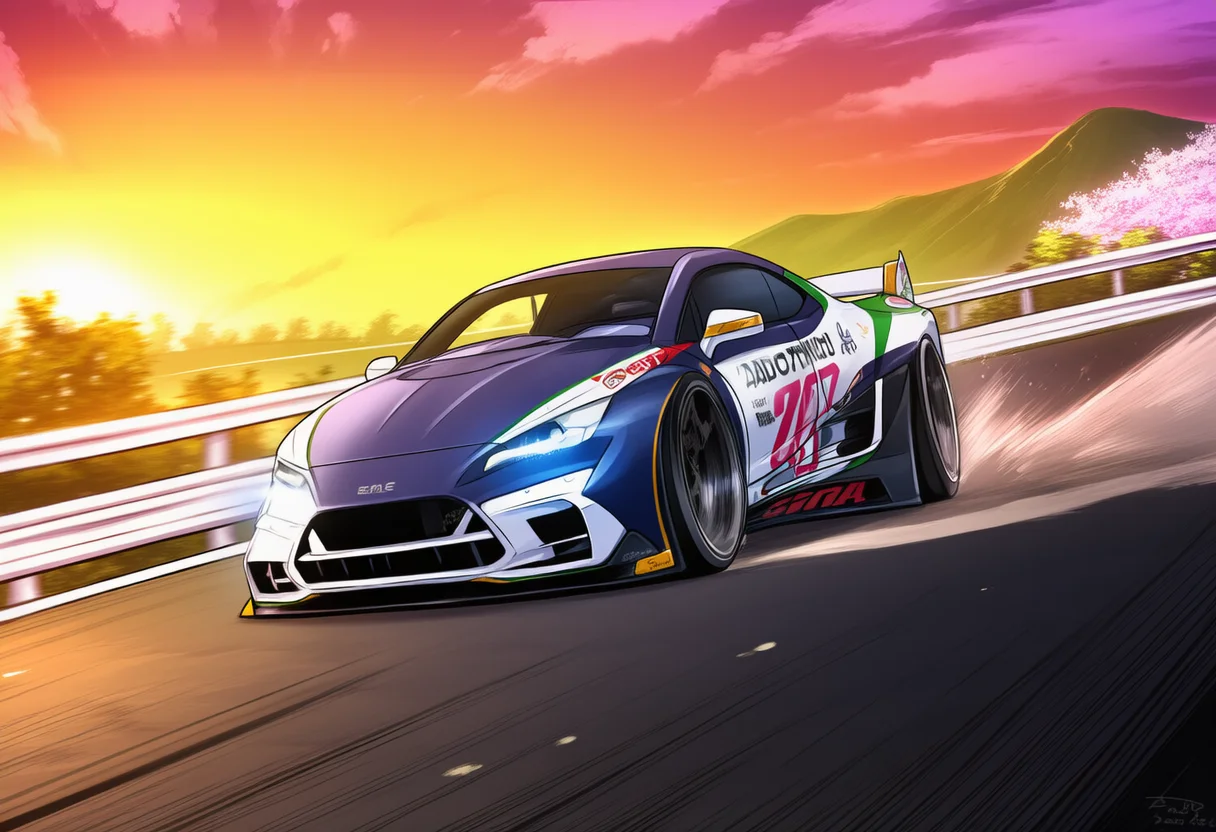
If there’s one feature in FH6 that I’d call an unqualified success, it’s the touge battles. Inspired by Japanese mountain-pass racing culture — yes, the Initial D vibes are absolutely intentional — these are point-to-point downhill and uphill duels on narrow mountain roads where precision matters more than raw speed.
Here’s why they work so well: the roads are narrow enough that you can’t just muscle your way through. You have to actually drive. Brake late, clip the apex, manage your momentum through switchbacks. One mistake and you’re in the guardrail, losing seconds you won’t get back. The AI opponents are aggressive but fair, and the mountain pass environments are some of the most visually stunning in the entire game. Fog rolling through hairpins at dusk? Chef’s kiss.
I’ve spent more time in touge battles than any other race type, and I don’t see that changing. They’re the best new addition to the Horizon formula since FH3’s Blizzards, and they fit the Japan setting so perfectly that it’s hard to imagine the game without them. If you’re on the fence about FH6, touge battles alone are worth the price of Game Pass admission. They’re that good.
The only downside? There aren’t enough of them. I burned through the available touge events faster than I expected, and I’m already hungry for more. Here’s hoping Playground adds more in post-launch updates. FH6 easily earns a spot on my Best Games 2026: 20 Games You Need to Play Right Now list, and touge battles are a big reason why.
The Car Roster Problem — Why 550+ Cars Still Feels Thin
550+ cars at launch sounds like a lot. It is a lot. But here’s the uncomfortable truth: too many of those cars are carry-overs from FH5, and the number of genuinely new-to-Forza vehicles is disappointingly small. Some brands are missing entirely, and several cars that were in FH5 have been cut from FH6. [VERIFY: The exact number of new-to-Forza cars has not been officially confirmed by Playground Games.]
Then there are the Forza Edition cars. These are pre-tuned, pre-liveried variants that pad the roster count without adding anything meaningful. When you see “550+ cars” on the box, you don’t expect a chunk of those to be the same base car with a different tune and a fancy livery. It feels like padding, and the community has been vocal about it.
For a game set in Japan — a country with one of the richest car cultures on the planet — the roster should be absolutely stacked with JDM legends, kei cars, Japanese luxury sedans, and obscure tuning shop specials. Instead, it feels like we got the greatest hits and not much else. Where are the deep cuts? Where’s the weird stuff that makes car culture interesting?
Look, the cars that are here drive beautifully, and the improved engine sounds make every garage session a joy. But if you’re a car roster nerd — and if you’re reading this, you probably are — you’ll notice the gaps. It’s not a dealbreaker, but it’s a disappointment in a game that should have knocked this category out of the park. You can read more about the full feature breakdown at the official Forza site.
The Estate System — Car Enthusiast Dream or Unnecessary Fluff?
The Estate is FH6’s answer to the “what do I do with all my cars and money” problem. It’s a customizable property with garage building, a free-build zone, and enough personalization options to keep you busy for hours. You can design your dream garage, display your favorite cars, and essentially create a personal car museum.
I have… mixed feelings.
On one hand, I genuinely enjoyed building out my Estate. There’s something satisfying about curating a space that reflects your car taste. The garage customization is deeper than anything Horizon has offered before, and if you’re the type who spends hours in the livery editor, you’ll probably love this.
On the other hand, it doesn’t add anything to the racing experience. It’s a side activity — a very polished side activity, but a side activity nonetheless. And with 8 purchasable Home Garages across the map for fast travel and vehicle storage, the Estate sometimes feels redundant. Why build an elaborate home base when you can just fast-travel between garages?
I think the Estate will be beloved by a specific subset of players — the car collectors, the decorators, the role-players. For everyone else, it’s a nice-to-have, not a must-have. Playground clearly invested significant development resources here, and I can’t help but wonder if some of that effort could have gone toward expanding the car roster or adding more race types instead.
Cross-Play, PS5, and Game Pass — The Accessibility Win
Let’s talk about the biggest accessibility win in FH6: full cross-play and cross-save across Xbox, PC, Steam, and — eventually — PS5. Yes, Forza Horizon is coming to PlayStation. The PS5 version is slated for H2 2026 [VERIFY: Exact PS5 release date has not been confirmed beyond “H2 2026”], and yes, PS5 players will play in the same world as Xbox and PC players with shared progression.
This is a huge deal. For years, Forza Horizon has been an Xbox/PC exclusive, and seeing it open up to PlayStation players feels like a genuine shift in the gaming landscape. If you have friends on different platforms, you can finally race together. Your garage, your progress, your credits — everything carries over. That’s the way it should be, and I’m glad Microsoft and Playground made it happen.
Game Pass is the other big accessibility story. FH6 is on Game Pass Day One, which makes trying it a no-brainer. If you have a Game Pass subscription, you can download FH6 right now and decide for yourself whether it’s worth the full price. Given the $69.99 standalone cost, Game Pass is absolutely the smart way to play if you’re on the fence. For portable players, my Steam Deck OLED Review: Still the Best Handheld PC in 2026 covers how well that device handles modern AAA — and FH6 runs surprisingly well on it, though you’ll want to tweak some settings for stable framerates.
The Premium Edition pricing, though? That’s where the goodwill starts to fray. The Game Pass upgrade to Premium costs roughly as much as the game itself, which the community has rightfully called out. If you want early access and the expansion pass, you’re paying a premium — pun intended. It’s hard not to feel nickel-and-dimed when the base game is already $69.99. More on the official pricing and editions at the Xbox store page.
Is This Just FH5 in Japan? My Honest Take
This is the question everyone’s asking, so let me give you a straight answer: no, but I understand why people say it.
The core Forza Horizon formula hasn’t changed. You drive cars in an open world, you enter events, you earn credits, you buy more cars, you customize them, you repeat. That’s been the loop since 2012, and FH6 doesn’t reinvent it. If you’re burned out on Horizon, Japan won’t fix that.
But the additions — wristband progression, touge battles, the Estate, seamless event entry, open-world car meets, the reworked campaign where you start as a nobody — these are meaningful changes that add up. The game feels different from FH5. It’s more structured, more intentional, and more respectful of your time in some ways (and less in others — looking at you, wristband grind).
The graphics improvements are real but incremental. If you’re expecting a generational leap over FH5, you’ll be disappointed. The art direction in Japan is stunning, but the underlying engine tech hasn’t made a massive jump. Ray tracing improvements are welcome but not transformative. The Forza Horizon series has always been a looker, and FH6 continues that tradition without redefining it.
My bottom line: FH6 is a meaningful evolution, not a revolution. If you skipped FH5 entirely, FH6 is absolutely the one to play. If you put 500 hours into FH5 and are feeling franchise fatigue, the Japan setting and new features might reignite your spark — or they might not. Game Pass makes this an easy experiment.
Frequently Asked Questions
Is Forza Horizon 6 worth buying in 2026?
If you have Game Pass, absolutely — it’s a no-brainer to try. At full price ($69.99), it depends on how much you value the Japan setting, touge battles, and structured progression. If you already own FH5 and are on the fence, Game Pass lets you test the waters before committing.
Does Forza Horizon 6 have cross-play?
Yes. FH6 supports full cross-play and cross-save across Xbox Series X|S, PC (Steam and Windows Store), and PS5 (when the PS5 version launches in H2 2026). Your progression, garage, and credits carry over between platforms.
What are touge battles in Forza Horizon 6?
Touge battles are a new race type inspired by Japanese mountain-pass racing. They’re point-to-point duels on narrow mountain roads where precision and driving skill matter more than raw speed. Think Initial D — downhill and uphill battles through tight hairpins and switchbacks.
Is Forza Horizon 6 on Xbox Game Pass?
Yes, Forza Horizon 6 is available on Xbox Game Pass from Day One (May 19, 2026). Premium Edition early access started May 15 for those who purchased the Premium Edition or the Premium Add-Ons Bundle for Game Pass.
How does the wristband progression system work?
The wristband system has seven tiers that gate content behind skill milestones. You start as a tourist visiting Japan and must earn each wristband by completing events and demonstrating skill. It replaces the instant-superstar approach of FH4 and FH5, giving the game more structured progression — though some players find the mid-game tiers grindy.
Conclusion
After dozens of hours in Forza Horizon 6, here’s where I land: it’s the best Horizon game since FH3, and it’s the one fans have been begging for since the Japan setting was first rumored. The map is gorgeous, touge battles are a genuine highlight, the wristband system adds meaningful progression (even if it drags in the middle), and cross-play across all platforms is a massive win. The Triton Acoustics audio upgrade alone makes the game worth experiencing.
But it’s not perfect. The car roster is thinner than it should be for a Japan-set game, the Premium Edition pricing is hard to swallow, and the core formula hasn’t evolved enough to silence the “FH5 in Japan” critics entirely. The graphics improvements are incremental, not generational.
My recommendation: play it on Game Pass. If you love it, buy it. If you don’t, you’re out nothing but time. Either way, the Japan setting alone is worth the visit — just don’t expect a revolution. It’s a damn good evolution, and right now, that’s enough for me.
- RTX 5070 Review: The Sweet Spot GPU of 2026
- Best Games 2026: 20 Games You Need to Play Right Now
- Steam Deck OLED Review: Still the Best Handheld PC in 2026
Further reading: Best Games 2026: 20 Games You Need to Play Right Now, 007 First Light Review — Did Bond Finally Get It Right?.